Source Automation Winding PP Filter Element for Food, Industry, Medicine
Compare 30 automation winding pp filter element options from verified Chinese suppliers. Buyers can evaluate micron ratings, materials, and customization for food, beverage, and industrial applications. These products feature PP construction, various micron ratings, and meet FDA and EU standards for reliable filtration performance in multiple sectors.
Key considerations
Products List




Comprehensive Sourcing Guide
Automation Winding PP Filter Element Sourcing Guide
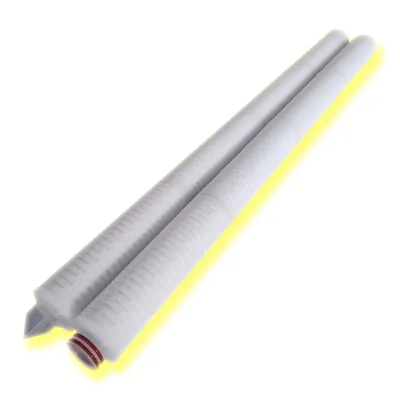
Procuring automation winding PP filter elements requires a strategic approach that balances technical precision with commercial viability. These components are critical for maintaining fluid integrity in automated processing lines, where consistent flow rates and particle retention are non-negotiable. Buyers must understand that "PP" refers to polypropylene, a material chosen for its chemical resistance and structural stability in demanding environments. The winding construction specifically offers a gradient density structure, which enhances dirt-holding capacity while maintaining low initial pressure drop. This makes them ideal for pre-filtration stages in high-throughput systems.
The sourcing landscape for these elements is diverse, with manufacturers offering various customization options to meet specific operational needs. Key attributes such as micron rating, length, and end cap configuration must be aligned with existing housing systems. Buyers should note that while many suppliers offer standard sizes, custom lengths and diameters are frequently available. Understanding the distinction between nominal and absolute ratings is essential for selecting the right filtration grade. This guide provides a structured framework for evaluating suppliers, verifying technical specifications, and ensuring long-term supply chain reliability for automation winding PP filter elements.
Product Scope and Observed Listing Signals
The market for polypropylene filter elements exhibits a wide range of product types, including wound, folded, and melt-blown variants. Observed listings indicate a price range from $0.25 to $150 USD, reflecting significant variation in quality, micron precision, and packaging standards. Minimum order quantities typically span from 1 to 1000 units, allowing both trial orders and bulk procurement. Buyers should observe that "PRE Filter" and "Medium Filter" grades are common, with micron ratings ranging from 1 to 100 microns. These signals suggest a mature market with options for both coarse pre-filtration and finer polishing stages.
Product models such as CPPH, CPPX, and CPPV appear frequently, indicating standardized naming conventions among manufacturers. Lengths are commonly available in 5, 10, 20, 30, 40, and 50-inch configurations, with some suppliers offering OEM custom lengths. Outer diameters often include 2.5-inch and 4.5-inch options, though standard 2.55-inch housings are the industry norm. End cap codes like 0, 3, 6, 7, 8, and 9 provide compatibility with various housing interfaces. Buyers must verify that the specific model number corresponds to their required flow rate and pressure tolerance, as generic listings may not reflect the exact performance characteristics needed for automation winding applications.
Technical Specifications to Verify
Verifying the inner core material is a critical step, as it determines the structural integrity of the filter under pressure. Most listings specify PP (polypropylene) cores, which offer excellent chemical resistance and compatibility with aqueous solutions. However, some products may list "None" or alternative materials, which can impact performance in high-pressure automation systems. Buyers should confirm that the core is robust enough to prevent collapse during operation. Additionally, the construction type, whether 3-layer or single-layer, affects the filter's dirt-holding capacity and service life. Gradient wound structures are preferred for their ability to trap particles at varying depths.
Micron rating verification is equally important, with options ranging from 1 to 100 microns. For automation winding applications, precise micron selection ensures that downstream equipment is protected without causing excessive pressure drop. Buyers should also check the filtration rate, which is often listed as 1, 3, 5, or 10 microns. The media composition, such as chemical fiber or wood pulp fiber, influences chemical compatibility and temperature resistance. It is essential to confirm that the filter media is suitable for the specific fluid being processed. Additionally, the filter connector type, such as the 226 connector, must match the housing interface to ensure a leak-free seal during operation.
Compliance and Safety Documentation
Regulatory compliance is a cornerstone of safe and effective filtration procurement. Buyers must verify that products meet relevant food and beverage safety standards, such as FDA 21 CFR 177.1520. This certification ensures that the polypropylene materials used in the filter element are safe for contact with consumable products. Similarly, EU standards should be confirmed for operations within European markets. These certifications provide assurance that the filter does not leach harmful substances into the processed fluid. Buyers should request current certification documents from suppliers to validate compliance claims.
Beyond material safety, performance testing documentation is crucial for verifying filtration efficiency. Standards such as SGS testing provide independent validation of the filter's removal rating and flow characteristics. Buyers should ensure that test results are recent and specific to the product model being purchased. For applications in the medicine or metallurgy sectors, additional compliance with industry-specific regulations may be required. It is also important to verify that the packaging, whether export standard, carton, or wooden case, protects the filter from contamination during transit. Proper packaging ensures that the filter arrives in pristine condition, ready for immediate installation in automation systems.
Cost Drivers and Commercial Terms
Several factors influence the total cost of ownership for automation winding PP filter elements. The micron rating and filtration grade are primary cost drivers, with finer ratings generally commanding higher prices due to increased manufacturing complexity. Customization options, such as non-standard lengths or specialized end caps, can also increase costs. Buyers should evaluate whether standard sizes meet their needs to minimize expenses. Additionally, the quantity ordered significantly impacts unit pricing, with larger volumes typically yielding better rates. Understanding these variables helps in budgeting and negotiating favorable commercial terms.
Packaging and logistics also play a role in overall costs. Export standard packing, individual poly bags, and wooden cases offer varying levels of protection and cost. Buyers should select packaging that balances protection with shipping efficiency. Lead times and MOQs are critical commercial terms that affect inventory management. Suppliers with flexible MOQs allow for just-in-time procurement, reducing storage costs. However, longer lead times may require larger safety stocks. Buyers should negotiate clear terms regarding payment methods, warranty policies, and return procedures to mitigate financial risk. Transparent commercial terms ensure a smooth procurement process and predictable operational costs.
Supplier Qualification and Quality Control
Evaluating supplier qualifications is essential for ensuring consistent product quality and reliable supply. Buyers should verify that manufacturers have established quality control processes, including raw material inspection and finished product testing. Certifications such as ISO 9001 indicate a commitment to quality management systems. Suppliers with a history of serving industries like food and beverage or medicine are often more reliable, as they have demonstrated compliance with stringent regulatory requirements. Buyers should request references or case studies to assess the supplier's track record in similar applications.
Quality control extends to the manufacturing process itself. Buyers should inquire about the supplier's testing protocols for pressure integrity, flow rate, and particle retention. Regular audits of the manufacturing facility can provide insights into production consistency and hygiene standards. Additionally, suppliers should offer clear documentation of their quality assurance procedures. Buyers should also consider the supplier's ability to provide technical support and troubleshooting assistance. A responsive supplier can help resolve issues quickly, minimizing downtime in automation systems. Establishing a strong relationship with a qualified supplier ensures long-term reliability and performance of the filter elements.
Long-Term Procurement Checks
Long-term procurement success depends on continuous monitoring of supplier performance and product quality. Buyers should establish key performance indicators (KPIs) such as defect rates, delivery timeliness, and customer satisfaction. Regular reviews of these metrics help identify potential issues before they impact operations. Additionally, buyers should stay informed about industry trends and technological advancements in filtration. This knowledge can inform decisions about upgrading to more efficient or durable filter elements. Continuous improvement initiatives with suppliers can lead to cost savings and enhanced performance over time.
Supply chain resilience is another critical aspect of long-term procurement. Buyers should diversify their supplier base to mitigate risks associated with single-source dependencies. Regularly evaluating alternative suppliers ensures competitive pricing and availability. Additionally, buyers should maintain open communication with suppliers regarding future needs and potential changes in specifications. This proactive approach allows for better planning and coordination. Finally, buyers should periodically re-evaluate the total cost of ownership, including maintenance and replacement costs, to ensure that the selected filter elements remain the most economical and effective solution for their automation winding applications.
FAQs
What materials are used in automation winding pp filter elements?
These elements typically use chemical fiber or wood pulp fiber as the primary media. Some variants incorporate fiberglass or polypropylene nominals for specific filtration needs. The inner core is often made of PP, while the construction may feature a 3-layer design to enhance structural integrity and filtration efficiency for various industrial applications.
What micron ratings are available for these filter cartridges?
Available micron ratings range from 1 to 100 microns for general PP filters. Specific wound filter models offer precise ratings of 1, 3, 5, and 10 microns. High-precision folding microporous filters can achieve removal ratings as fine as 0.1, 0.22, 0.45, and 1 micron, catering to strict pharmaceutical and beverage standards.
Can automation winding pp filter elements be customized?
Yes, customization is available for many filter types. Buyers can specify outer diameters such as 2.5 or 4.5 inches, and lengths ranging from 5 to 50 inches. End cap codes like 0, 3, 6, 7, 8, and 9 are supported. OEM specifications are accepted to match unique system requirements and installation constraints.
What standards do these filters meet for food and beverage use?
Many products meet FDA 21 CFR 177.1520 and EU standards for safety. These certifications ensure suitability for food and beverage applications. Some models also carry SGS certification. These standards verify that the materials, such as polypropylene and chemical fiber, are safe for contact with consumable liquids and do not leach harmful substances.
What are the common specifications for length and diameter?
Standard lengths include 5, 10, 20, 30, 40, and 50 inches. Outer diameters are commonly 2.5 inches or 4.5 inches, with OEM options available. Models like CPPH and CPPX follow 5 to 50-inch standards. Other series support 10, 20, 30, 40, and 60-inch lengths to fit diverse housing configurations.
How are these filter elements packaged for export?
Packaging varies by product type. Some are packed in export standard packing or cartons. Others use individual poly bags, boxes, and wooden cases for protection. Shrink wrap and box packages are also common. Wooden case packing is used for specific models to ensure safe transit and prevent damage during international shipping logistics.